Terabox Node Server Communication in Cooperative Multi-Node Storage

Modern cloud storage platforms such as TeraBox do not rely on a single data center. Instead, they operate on a cooperative multi-node storage architecture, where thousands of distributed storage nodes work together in real time to store, retrieve, secure, and optimize user data.
At the core of this architecture lies node–server communication. It enables geographically distributed machines to function as a unified, intelligent storage system. Every upload, download, synchronization, and recovery operation depends on continuous communication between nodes and central coordination servers.
This article explains how cooperative multi-node storage works, how nodes communicate with servers, how performance and reliability are achieved, and why platforms like TeraBox depend on this architecture to deliver scalable and resilient cloud services.
How Cooperative Multi-Node Storage Powers TeraBox Performance
TeraBox uses a distributed cloud storage model where files are divided into encrypted chunks and stored across multiple cooperative nodes located in different regions.
This design provides several critical benefits:
- Faster access by serving data from the nearest available node
- High fault tolerance through automatic failover
- Load balancing during peak traffic
- Continuous availability even if individual nodes fail
If one node becomes unavailable, another node instantly replaces it, ensuring uninterrupted access and consistent performance.
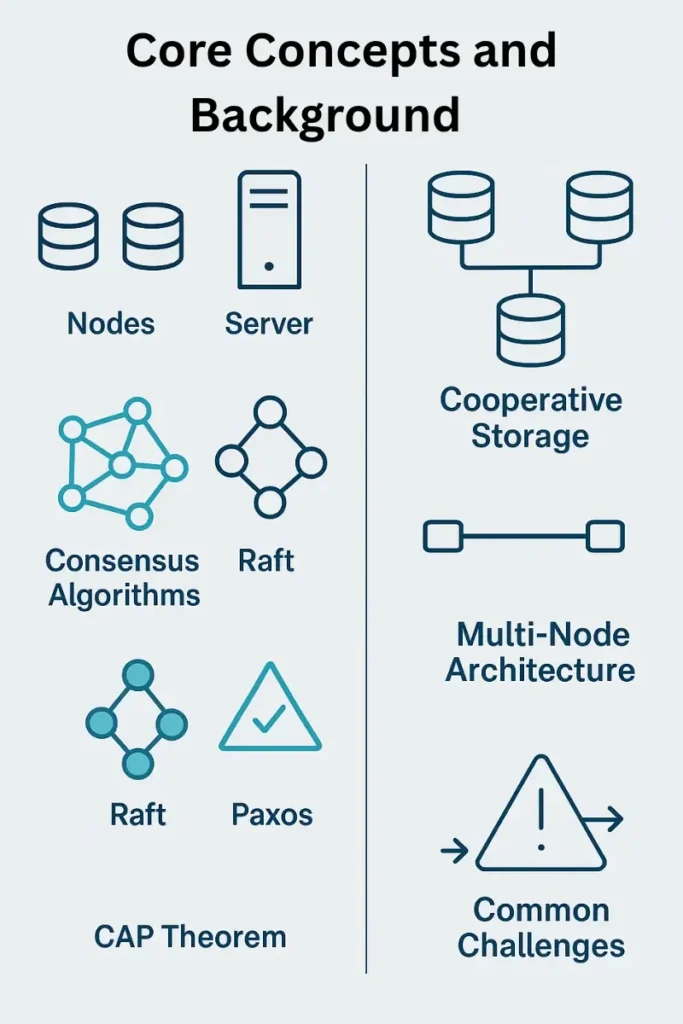
Core Concepts and Background
Core concepts
Cooperative storage relies on several foundational components. A node is a storage unit responsible for holding encrypted data fragments, while a server acts as the central coordinator that manages file locations, user permissions, and overall system health. When a file is uploaded, it is divided into multiple chunks, encrypted, and distributed across several nodes. Each chunk is indexed using metadata, enabling the system to quickly locate and reconstruct the original file. To enhance reliability, data is also replicated across different nodes, ensuring continuous availability even if one machine fails..
Background
Traditional storage systems stored all data on a single server, which made them highly vulnerable to hardware failures, performance bottlenecks, and security threats. Cooperative multi-node storage was developed to eliminate these limitations by distributing data across a network of interconnected machines. Today, more than 80% of global cloud service providers rely on distributed storage architectures because they deliver superior scalability, higher reliability, and improved cost efficiency.
Node-Server Communication in Cooperative and Multi-Node Storage Systems
In a distributed system like TeraBox, nodes and servers communicate continuously to maintain system integrity and performance. Storage nodes report their operational status, available capacity, and performance metrics, while servers issue instructions for storing, relocating, or retrieving data. This real-time communication keeps all components synchronized and operating efficiently. Without constant coordination, the system would be unable to accurately track data locations or verify data integrity.
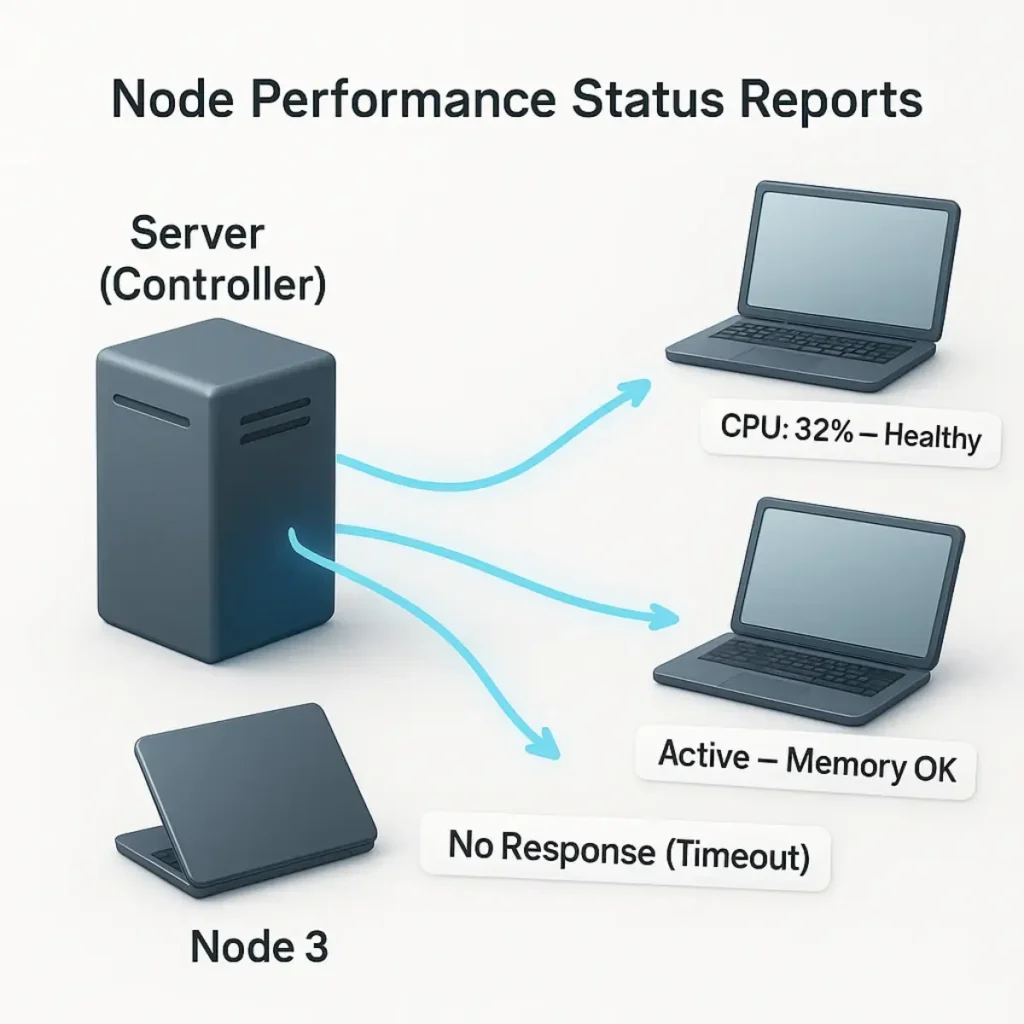
Node Performance Status Reports
Every node periodically sends detailed performance reports to the central server. These reports include metrics such as disk utilization, network throughput, error rates, and processing load. By analyzing this data, the server can intelligently balance traffic, prevent node overload, and redirect workloads to healthier machines. This process, known as dynamic load balancing, significantly enhances system stability and can improve overall efficiency by more than 50% in large-scale cloud environments.
Command and Control Messages
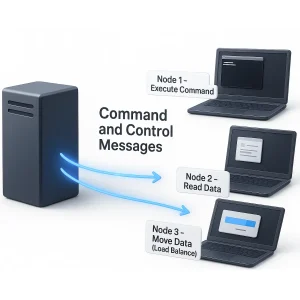
Servers issue control instructions to storage nodes to perform specific tasks such as storing new data, removing corrupted blocks, creating replicas, or migrating files between nodes. These command messages enable TeraBox to respond automatically to traffic spikes, hardware failures, and changing user demand without requiring manual intervention.
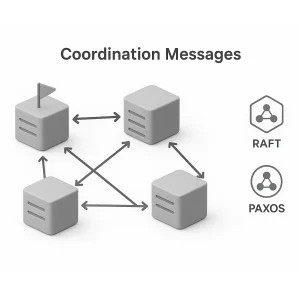
Coordination Messages
Coordination messages allow storage nodes to function collaboratively within a distributed system. When a node updates or replicates data, peer nodes validate and acknowledge the change. This coordinated verification process ensures consistency across all replicas and prevents data discrepancies that could lead to file corruption.
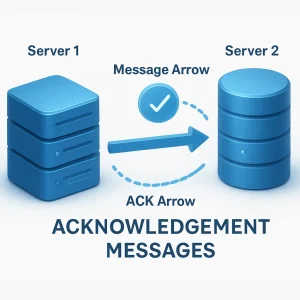
Acknowledgement Messages
Acknowledgement messages confirm the successful completion of system operations. When a node sends or receives data, it returns an acknowledgement to the server to verify that the action was executed correctly. This confirmation mechanism ensures that every file chunk is properly stored, validated, and accounted for within the distributed storage system.

Failure Notices, Errors, and Fault Messages
If a node detects an issue such as hardware failure or data corruption, it immediately sends an error report to the server. The server then activates backup replicas, reconstructs missing data, and reassigns storage tasks to healthy nodes. This automated fault-recovery process is a key reason cloud platforms like TeraBox are able to maintain uptime levels exceeding 99.99%.
Protocols and Communication Channels
TeraBox relies on modern networking protocols such as TCP/IP to ensure reliable data transmission and HTTPS to secure communication channels. In addition, Remote Procedure Calls (RPCs) and message queue systems are used to efficiently exchange commands, status updates, and control messages across the distributed network.
Protocol / Mechanism | Description | Key Use Case / Benefits |
|---|---|---|
HTTP / REST APIs | A widely adopted, integration-ready standard for client–server communication that primarily uses JSON or XML data formats. | General-purpose web services offering stateless operations, broad compatibility, and straightforward integration across diverse platforms. |
gRPC | A modern, high-performance inter-process communication (IPC) framework built on HTTP/2 that uses efficient binary serialization through Protocol Buffers. | Low-latency communication between microservices, efficient data exchange, and high throughput across distributed systems. |
WebSockets / TCP | Enables full-duplex, bidirectional communication over a single persistent TCP connection. | Real-time applications that require immediate responses, including live updates, gaming, and persistent connection scenarios. |
TLS/SSL Encryption | Cryptographic protocols designed to secure data transmission, ensuring privacy and integrity between clients and servers. | Critical for protecting sensitive data in transit and preventing eavesdropping and man-in-the-middle attacks. |
Authentication & Authorization | Mechanisms used to authenticate communication endpoints and control their access permissions within a system. | Security measures that ensure only trusted nodes can access specific resources or execute authorized commands. |
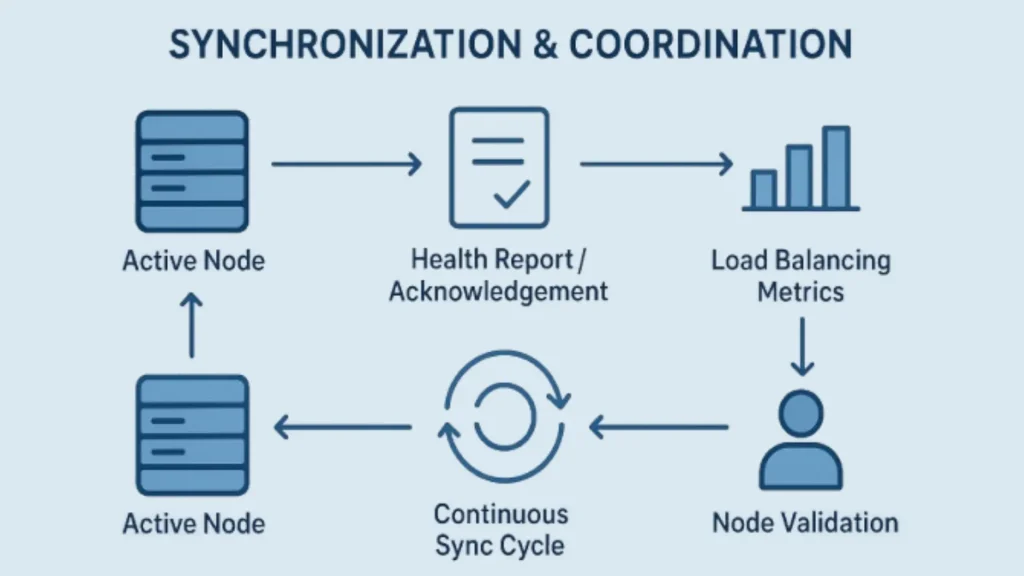
Synchronization and Coordination
Synchronization ensures that every replica of a file remains identical across the distributed system. The platform routinely compares hash values and timestamps to detect inconsistencies. When a discrepancy is identified, the affected copy is automatically repaired using a verified, healthy replica.
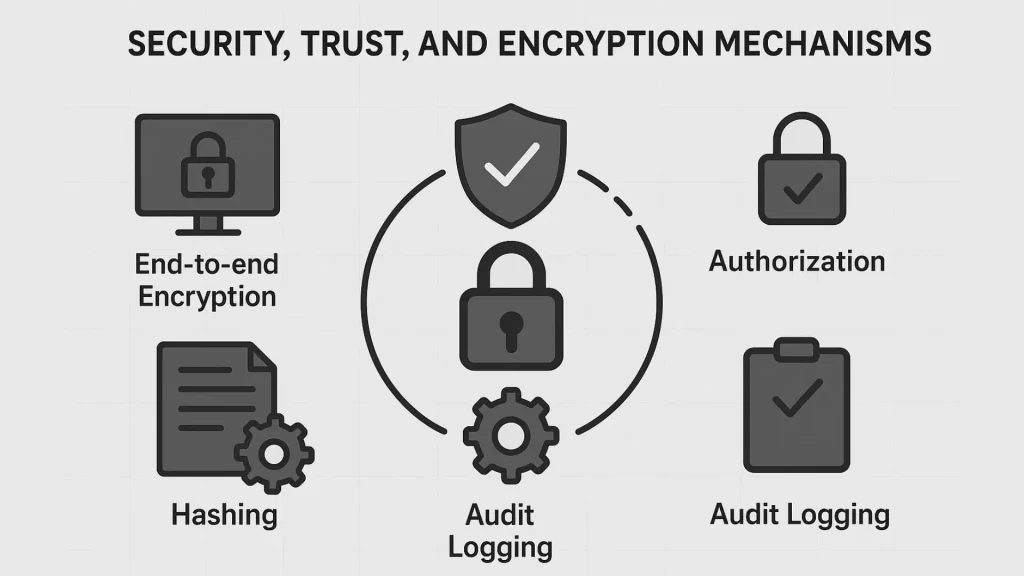
Security, Trust, and Encryption Mechanisms
TeraBox uses AES-256 encryption, a security standard widely adopted by financial institutions and government organizations. All data is encrypted before storage, and all communication channels are protected using TLS. In addition, storage nodes must authenticate themselves before joining the network, which prevents unauthorized access and strengthens overall system security.
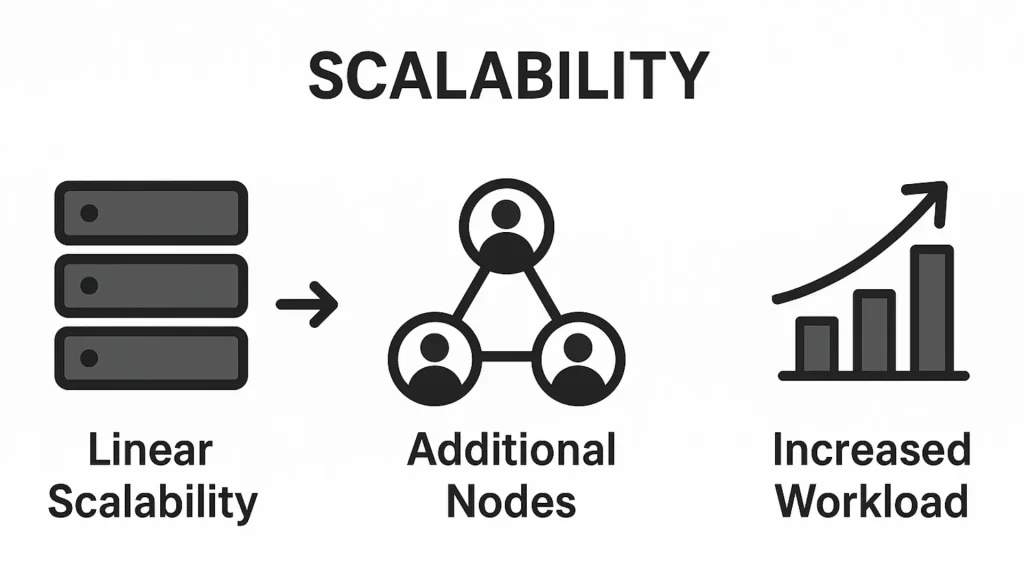
Scalability
Because data is distributed across multiple machines, expanding storage capacity is achieved simply by adding more nodes. This horizontal scaling model enables TeraBox to support millions of users and manage petabytes of data without compromising performance.
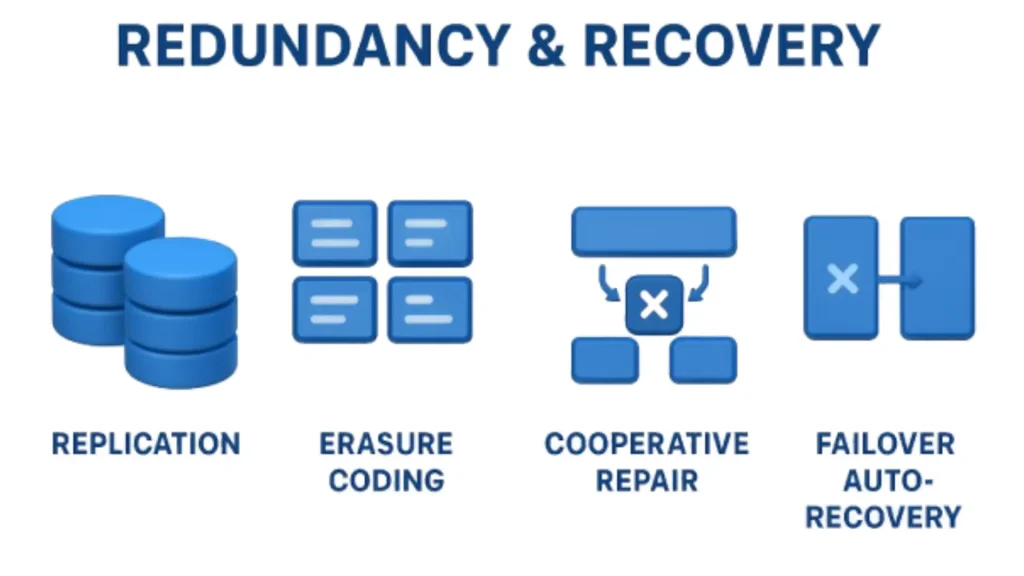
Redundancy and Recovery
Files are stored with multiple replicas across different nodes to ensure high availability. If one node fails, another replica immediately serves the data, maintaining uninterrupted access. This built-in redundancy significantly reduces the risk of data loss within the distributed storage system.
Emerging Concepts
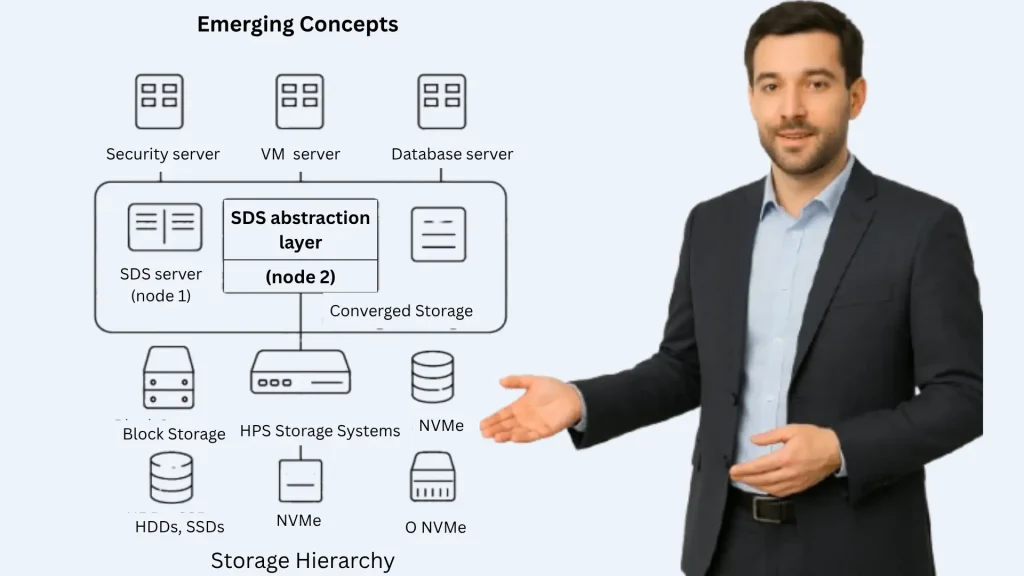
Modern distributed storage systems are increasingly adopting advanced techniques and architectures that improve node-to-server communication performance and overall scalability. The key concepts are outlined below.
Software-Defined Storage
Storage resources are managed by software rather than hardware, enabling intelligent and flexible allocation.
Converged Storage
Storage, computing, and networking resources are unified within a single integrated system.
High-Performance Storage Systems
Designed for high-demand workloads such as video streaming, AI processing, and big data analytics.
Data Types and Storage Models
Includes object storage, block storage, and file-based storage models.
Autonomic Optimization and Machine Learning
AI analyzes traffic patterns and optimizes node selection to improve performance and efficiency.
Latency and Energy Efficiency
Nodes are selected based on geographic proximity and power efficiency.
Storage Hierarchy and Tiered Storage
Frequently accessed data remains on high-performance storage, while older or less-used data is moved to lower-cost storage tiers.
Storage Resource Management Tools
Middleware manages node coordination and data placement across the distributed storage system.
Real-World Examples and References
Major platforms like Amazon S3, Google Drive, Dropbox, and TeraBox all rely on cooperative multi-node storage. Amazon S3 alone stores trillions of objects across distributed data centers worldwide.
Challenges and Limitations
Distributed storage systems must effectively manage synchronization, security, and network latency. While these systems are inherently complex, modern automation tools significantly reduce operational risks and maintenance overhead.

Common Security Threats and Risks
Common security threats include node hijacking, malware infections, and data interception. Encryption and strong authentication mechanisms help mitigate these risks and protect system integrity.
Synchronization Complexity
Maintaining millions of data replicas requires robust and highly efficient coordination software.
Node Reliability
Individual nodes may fail; however, built-in redundancy ensures that data remains available and accessible.
Network Latency
Geographic distance between nodes and end users can impact data access speed and latency.

Overhead
Frequent communication introduces processing overhead but significantly improves system reliability.
Research and Future Directions
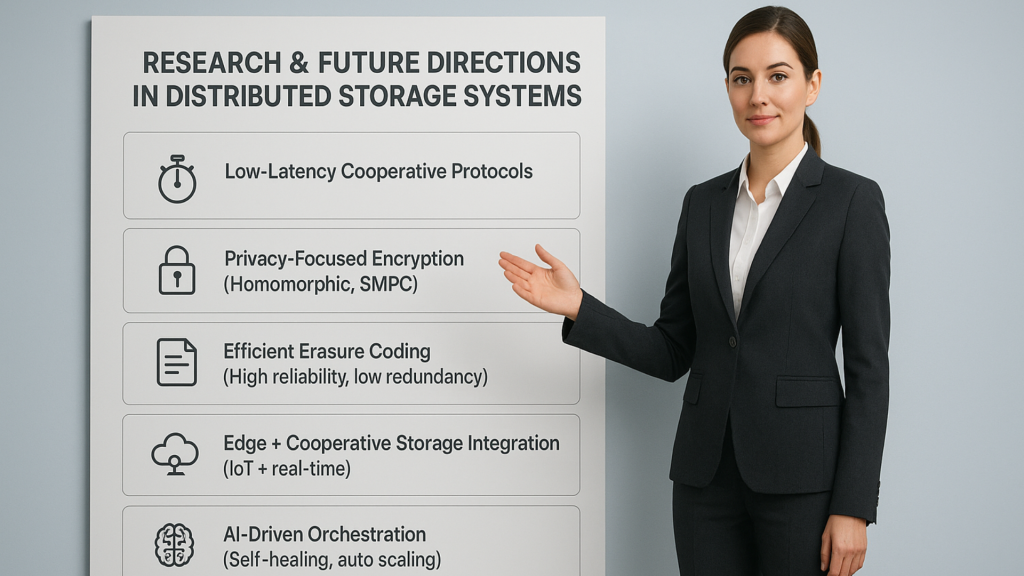
Low-Latency Cooperative Protocols
Designed to accelerate communication between storage nodes.
Privacy-Focused Models
Leveraging homomorphic encryption and secure computation techniques.
Improved Coding Techniques
Reduce storage requirements while improving data reliability.
Edge and Cooperative Storage
Data is stored closer to end users to enable faster access and lower latency.
AI-Driven Orchestration Systems
AI manages traffic and storage allocation while optimizing communication speed between nodes.
Privacy-Focused Models
Using homomorphic encryption and secure computation techniques.
Improved Coding Techniques
Reduce storage while increasing reliability.
Edge and Cooperative Storage
Data is stored closer to users to enable faster access and reduced latency.
AI-Driven Orchestration Systems
AI manages traffic flow and storage allocation to optimize system performance.
Conclusion
Cooperative multi-node storage enables platforms like TeraBox to deliver fast, secure, and reliable cloud services at scale. Through intelligent node–server communication, strong encryption, data replication, and continuous synchronization, TeraBox ensures that user data remains protected, consistent, and readily accessible.